Recipes Archive

Nancy Silverton’s Bittersweet Chocolate Cake

Posted December 4, 2011 By Adri

The Signature Chocolate Dessert from Osteria Mozza

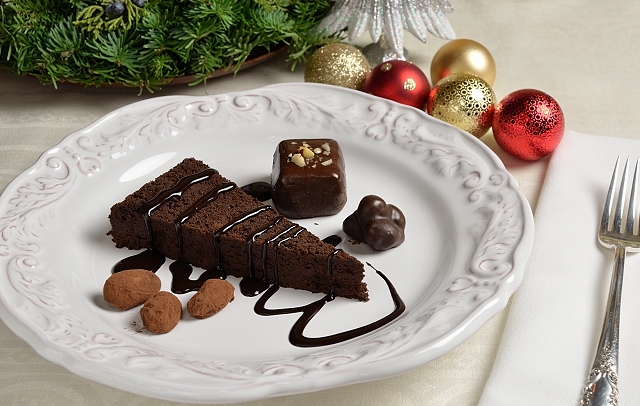
Chocolate Cake

Give Americans a menu, and most will order the chocolate dessert. Last Thursday’s Los Angeles Times Food section showcased a chocolate dessert dressed to the nines, just in time for the holidays. From Los Angeles area chef Nancy Silverton of Osteria Mozza, comes a bittersweet chocolate fantasia – dense chocolate cake napped with voluptuous fudge sauce presented with a trio of chocolate confections – candied almonds dipped and rolled in cocoa, chocolate coated candied hazelnut clusters and chocolate dipped honeycomb. I simply can not conjure up a more spectacularly elegant dessert for New Year’s Eve.

The success of this dessert will rest on the quality of your ingredients. With one pound of chocolate in the cake alone, you will not want to skimp, especially not when you are going to invest this much effort. Be sure to use fine quality: my favorite is Callebaut (available from Amazon). However, brands such as Valrhona and Scharffen Berger are also marvelous. The same holds true for the fudge sauce – use high quality cocoa. Go for Pernigotti, or Penzeys high fat (24%) natural cocoa from Penzeys.com.

Okay, I know it looks like a lot – this is fine dining in the home, senza dubito. Don’t be daunted; you can do this. Just do not make the mistake of thinking you can do it all in one day. Each of the five components can be made ahead, some as far as a week, and in the case of the fudge sauce, several weeks. The recipe and directions available at the LA Times website are meticulous in their detail, and Ms. Silverton and the editors have generously included a video.

Buone feste!

Chocolate Cake


Note: You can click on any picture for a larger image, and to see a slide show!

I have no affiliation with any product, manufacturer, or site mentioned in this article.

Print Friendly, PDF & Email
6 Comments so far. Join the Conversation

To know life one must taste the bitter and the sweet. – Italian proverb
Amari

Holiday Season is upon us, and along with the warmth, joy and feelings of brotherly love come huge feasts, and with the feasts, overindulgence. The Italians know how to cure that feeling of having overdone it at the table, and that cure comes in a bottle filled with liquors known as amari (singular, amaro). An essential part of the Italian gustatory experience, these eupeptics have yet to catch on in America. Amaro means bitter, and is not to be confused with Amaretto, the little bitter almond liqueur, nor with Amarone, the magnificent red wine from Italy’s Veneto region. No, amari are in a class by themselves. A large class of liquor numbering in the hundreds, there are even subsets divided by style. Amaro’s origins date back to at least 300 B.C. Originally tonics or elixirs, by medieval times they were integral to alchemists in their attempts to produce gold. It was a no go for the gold, but the elixirs, with their restorative nature and curative powers remain with us to this day. The recipes are always secret, proprietary and closely held by the Italian producers. As digestivi they are traditionally served neat (undiluted, at room temperature), or gently heated on occasion, in the cold winter months. These remarkably complex libations stimulate the appetite and promote the production of digestive acids and enzymes; as the Italians say, they open up the stomach – not exactly dinner table conversation, but digestion is a very big deal to the Italians.
Amari Glasses

I have already introduced you to Cocchi Americano, Aperol and Campari, all liquors with a distinctly bitter edge. But now we are moving up to the bitter big leagues, and like I said, just in time. Amari are distilled from neutral spirits or wine, even grappa, macerated on an array of ingredients – everything from citrus peel, to the roots of Alpine Yellow Gentian and the bark of the Cinchona tree. Also used are herbs, such as lemon balm and rosemary, spices such as cinnamon and cardamom and even artichokes. Yes, artichokes. Stroll with me into the world of amaro.

My beginning with amaro was less than auspicious. Much less. I was just a little kid, and we were at a big family weekend dinner. After dinner, with everyone well sated, and settling quietly back, Uncle Arunze brought out a bottle filled with brown liquid. He held it up and gestured, offering it to anyone who wished to imbibe. No one moved. No one spoke, lest gesture or utterance be misinterpreted. No one but me, the inquisitive little kid. The adults smiled, and Uncle Arunze poured the tiniest bit of the syrupy brown liquid into a small glass. I swallowed it. All at once. What a jolt. Inauspicious alright. Everyone had quite a laugh at my expense. The bitter alcoholic kick almost knocked me out of my chair. The intensely sugary grasp of the American sweet tooth is not to be underestimated, thus for many these bitter libations can be a very hard sell. Love of amari is learned and cultivated. These are full-bodied creations with flavor nuances that would make a wine nerd wax poetic.

Most range in price from about twenty to thirty dollars, although some such as Amaro Nonino command even higher prices. Many of the bottles and labels are works of art themselves, sleek creations with beautiful gilt script, colorful design, and labels that harken back to produce crates of old.
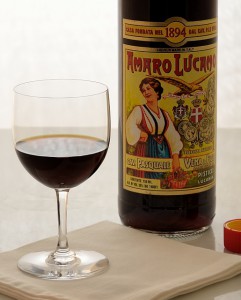
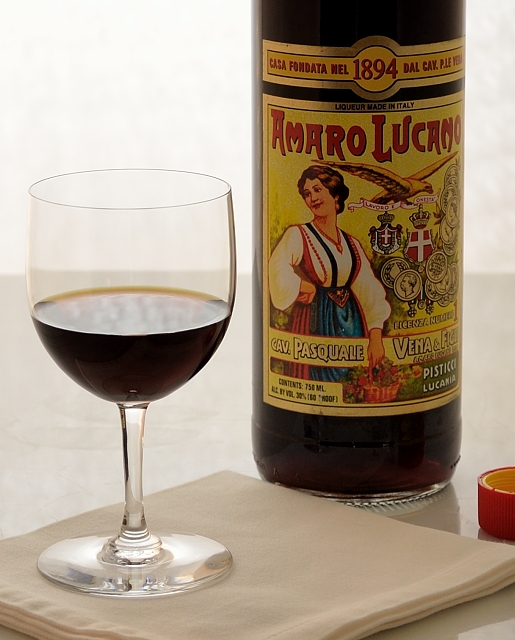
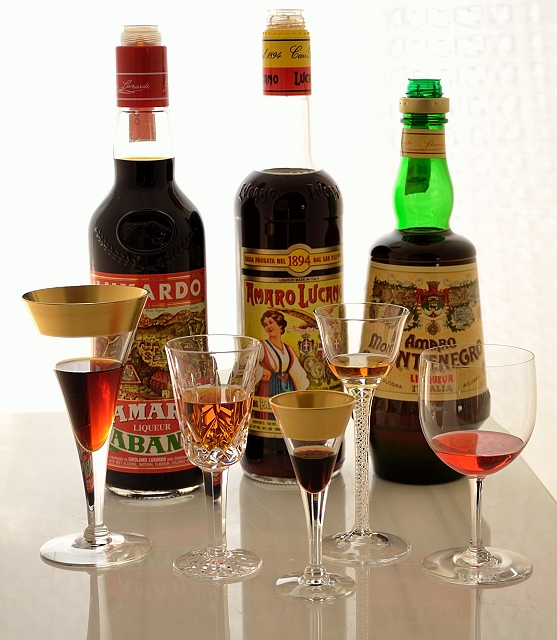
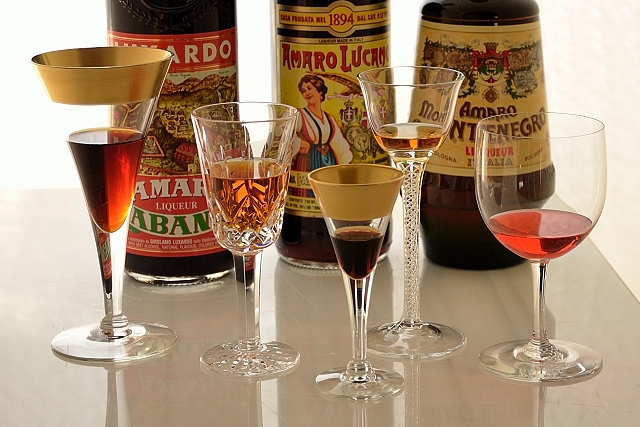
Amaro Lucano
 
From Basilicata (also known as Lucania) comes Amaro Lucano. The brightly festive label features a pacchiana in traditional dress (farmer in the Campanian dialect) with her basket of herbs and the motto lavoro e onesta (work and honesty). Made from 37 herbs, in the tasting are notes of ginger, licorice and cinnamon. Drink this neat or with sparkling water as an aperitivo. And yes, you can even pour a bit over ice cream.
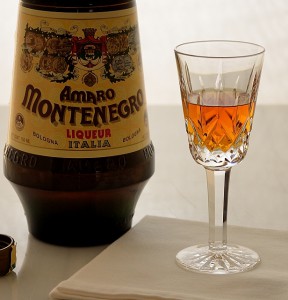


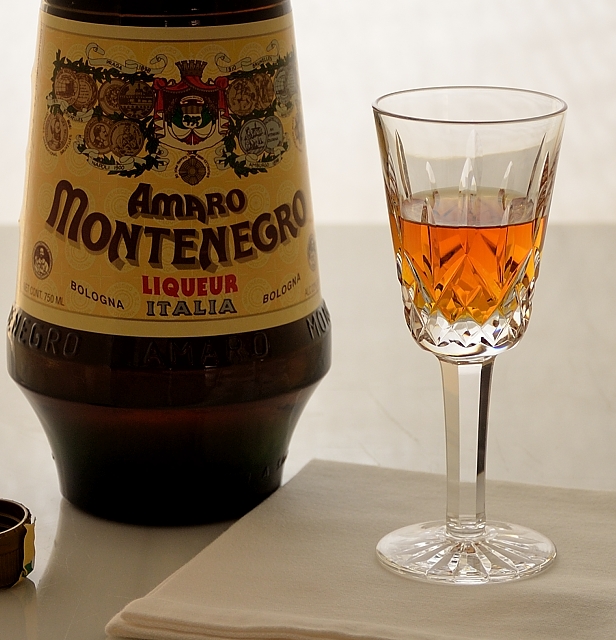
Amaro Montenegro
 

Amaro Montenegro is the sweetest and perhaps the most accessible of the three shown here with its spice and notes of citrus peel, clove, tea and herbs. Its name honors Italy’s second Queen, Helena of Montenegro. Developed in Bologna in 1885 and popular ever since, it is one of Italy’s best selling amari. Drink it neat as a digestivo, or mixed with sparkling water or ginger ale for a delightful aperitivo.
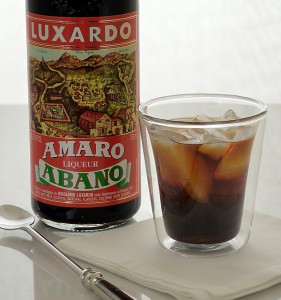


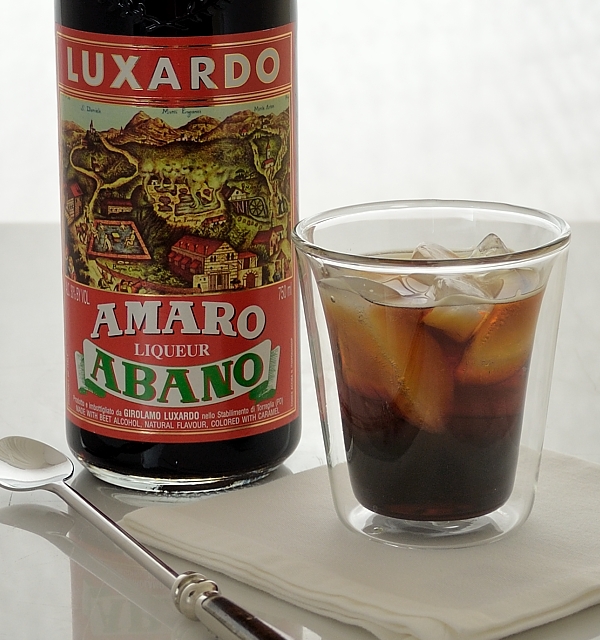
Amaro Abano


Amaro Abano, my current favorite, is made with herbs that grow wild in the volcanic hills south of Padova. Sipped slowly after a grand meal, she reveals herself. Initially sweet, followed by the warmth of cinnamon and black pepper, she fills your mouth with cardamom, bitter orange peel and the most remarkable tobacco finish. This is one complex creation. And as with Amaro Montenegro, mixed with sparkling water or ginger ale, this makes one fine aperitivo.


Somehow, when consumed neat on the novitiate’s empty stomach, the bitterness of these elixirs predominates, diminishing the drinking experience. I suggest you taste them on a full stomach. Additionally, their alcoholic content ranges from 16% to 40% and higher, and is nothing to sneeze at. As a beginning taster, with your first sip you may discern only bitter, or distinctly separate bitter and sweet. Sip again and the amaro will seduce you as you begin to taste the multiple part harmony of spice, herbs and fruit. The bitterness will remain a constant, taking its part as a pedal point.

When next you entertain guests with a grand and leisurely meal, consider a selection of amari to close your evening. Bring a few bottles to the table, and sip slowly to savor the delights within. Chances are it will be a new experience for many of your guests, and perhaps you will make a few converts. Bring a bottle of sparkling water along, or a pot of warm water, just in case your guests wish to ease the transition from newbie to convert. Watch as after just a bit, they push the water aside. Slowly sipping these complex libations will quickly become a treasured part of your meals – a time to sit back, reflect on the joy around you and count your blessings while enjoying the good will of your company. Enjoy the wonder that is the art of the distiller of amaro.

Next time you need some of the hair of the dog that bit you, try this instead of a Bloody Mary.


Amaro Montenegro and Fresh Orange Juice
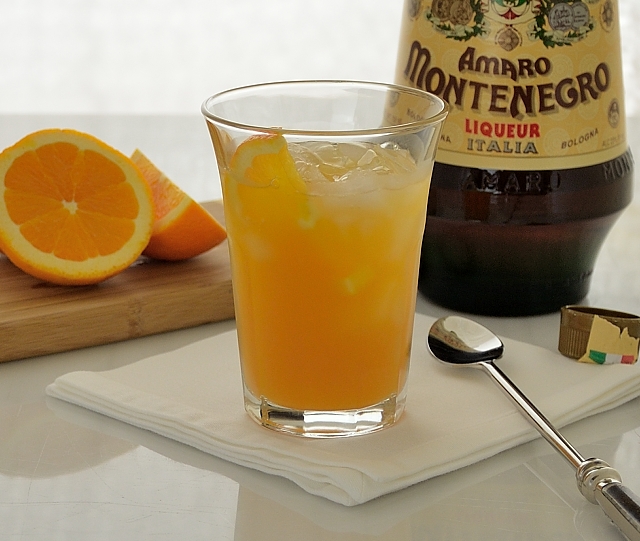
 

Amaro-Montenegro-Orange-Juice


serves 1

1 ounce Amaro Montenegro
2 ounces freshly squeezed orange juice
orange slice for garnish

Pour Amaro Montenegro over crushed ice. Add orange juice and stir with a bar spoon. Garnish with an orange slice. Serve at once.

And for the James Bond fans, just imagine ordering this one – “1 measure of Amaro Montenegro, 2 of fresh orange juice, over crushed ice. Then add a thin slice of orange.”

Bevi responsabilmente!


Note: You can click on any picture for a larger image, and to see a slide show!

I have no affiliation with any product, manufacturer, or site mentioned in this article.
Print Friendly, PDF & Email
7 Comments so far. Join the Conversation

Mocha Espresso with Amaretto

Posted November 26, 2011 By Adri

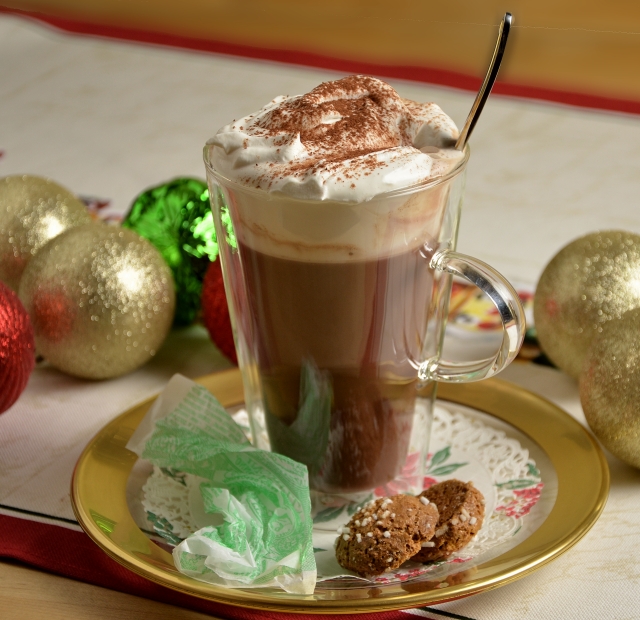
Mocha Espresso with Amaretto

Are you looking for a grown-up hot chocolate? Look no farther. This combination of cocoa, stovetop espresso and Amaretto topped with whipped cream will satisfy. The espresso lends its own unique coffee flavor to this libation. but if you do not have access to an espresso maker, stovetop or mechanical, you can use freshly brewed double strength coffee. As for the Amaretto, make it Luxardo, the most glorious of all. Whip your cream ever so softly, just to thicken it, and don’t omit the 1/8 teaspoon almond extract. It may not sound like much, but it works magic on the whipped cream.

Mocha Espresso with Amaretto

serves 2

2 cups whole milk
2 tablespoons granulated sugar
7 tablespoons Dutch process cocoa, such as Pernigotti or Penzeys High Fat
1cup brewed espresso
1/3 cup Amaretto
1 teaspoon vanilla extract
cocoa for dusting drinks

Whipped Cream
1 cup heavy cream
1 tablespoon granulated sugar
1 teaspoon vanilla
1/8 teaspoon almond extract

Make the whipped cream. Pour heavy cream into medium bowl. Add sugar and extracts. Beat until thickened. Set aside.

Pour milk into saucepan. Add sugar and cocoa, whisking to combine. Heat to scalding, whisking occasionally. Remove from heat and add hot espresso, Amaretto and vanilla extract. Pour into serving glasses, top generously with whipped cream and a dusting of cocoa. Serve at once.

Buon natale!

I have no affiliation with any product, manufacturer, or site mentioned in this article.

Print Friendly, PDF & Email
8 Comments so far. Join the Conversation

Pumpkin Lasagne ai Quattro Formaggi

Posted November 20, 2011 By Adri

Pumpkin Lasagne

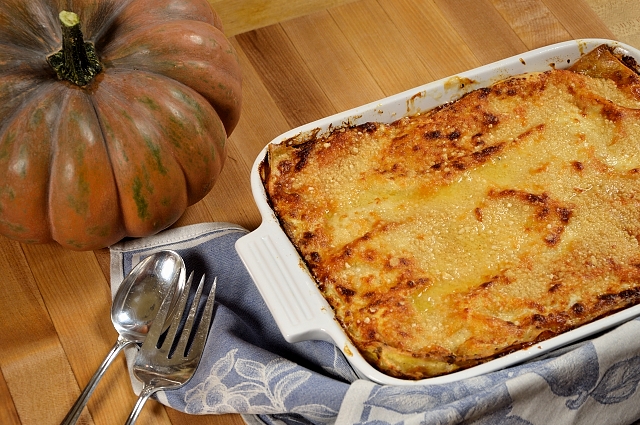
Pumpkin Lasagna with Four Cheeses

This one needs a Family Tree.  So here goes.  I have been a fan of Domenica Marchetti for quite some time.  Lucky me, I won a copy of her newest book, The Glorious Pasta of Italy from Paula Yoo of Write Like You Mean It.  (Great name, Paula.  Great site.)  I had just begun to give the book some serious reading when David Leite of Leite’s Culinaria included Domenica’s recipe for Pumpkin Lasagne in his Weekly Update.  (If you do not already subscribe, sign up for a wealth of information.)  And as if I needed any more convincing, Kathy included the recipe in her Food Lover’s Odyssey (another site not to be missed) Top 10 Italian Recipes from Around the Web. See what I mean about the Family Tree?

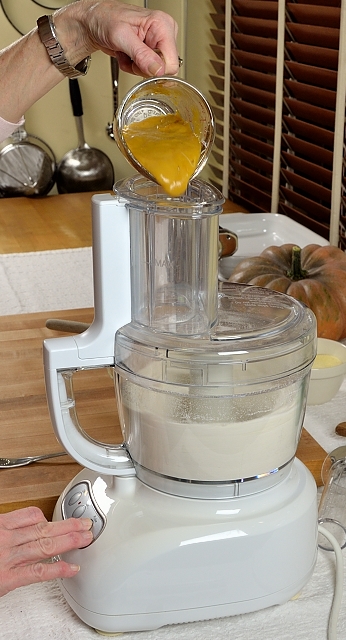
Pumpkin Pasta


I had been looking for something different for a first course for Thanksgiving when the Pumpkin Lasagne recipe caught my eye.  Lasagna, why not?  What surprised me was that the pumpkin puree is in the pasta, not between the layers.  By the way – don’t be thrown by lasagne ending with an “e”.  The name of this recipe refers to the multiple sheets of pasta known individually as lasagna.  The final “a” of Italian feminine nouns changes to “e” in the plural.  Mystery solved. Read more… »

Print Friendly, PDF & Email
19 Comments so far. Join the Conversation

Maccheroni alla Chitarra con Ragù d’Agnello

Posted November 6, 2011 By Adri

From Abruzzo comes Guitar Cut Pasta with Lamb Ragù

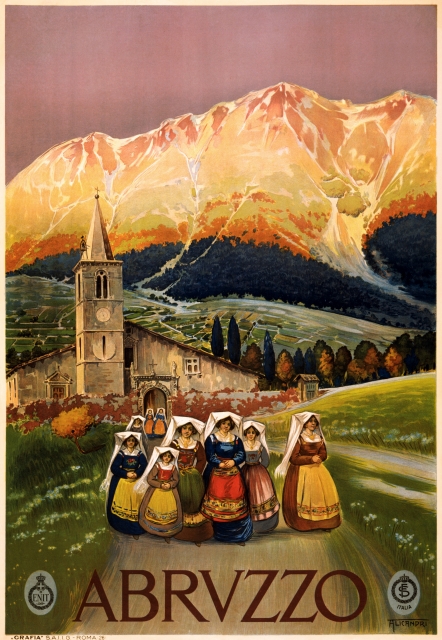
Abruzzo Poster

Abruzzo – from the majestic Gran Sasso to its beaches on the Adriatic Sea this part of Italy has postcard perfect terrain. To walk in the mountains of Abruzzo is to walk the age old route of the transumanza – the seasonal sheep migration, and indeed, sheep figure prominently in the socioeconomic history of this region and its cuisine.

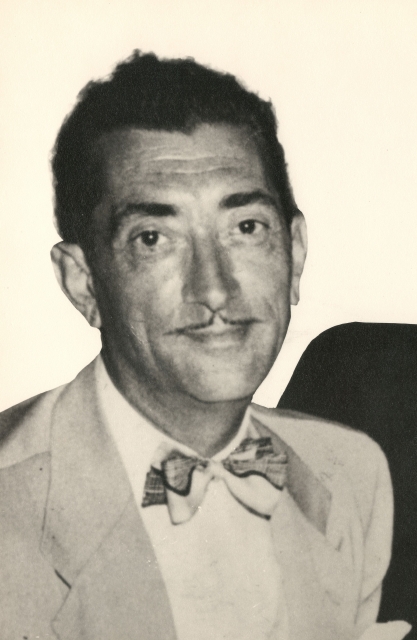
Gaetano Crocetti
Gaetano Alfonso Crocetti
Born 1894 Montesilvano, arrived New York 1913, died 1967 Los Angeles, California

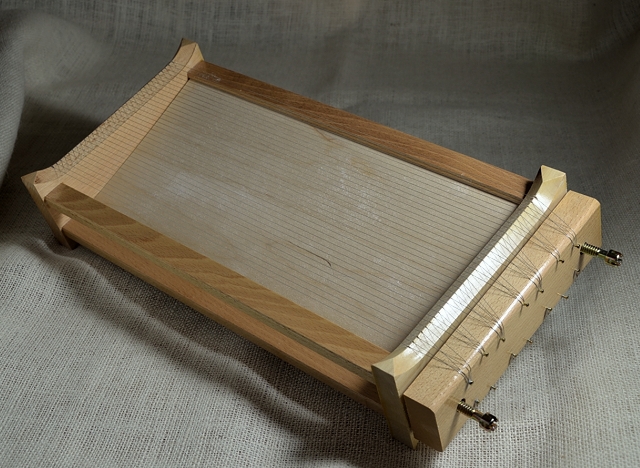
My grandfather, Gaetano Crocetti was born in Montesilvano, Abruzzo. He loved the food of his homeland, and although I have written previously about Ferratelle, the Abruzzese take on Pizzelle, this region has as its most singularly recognizable contribution to Italian cookery an implement known as the chitarra, a tool used to cut pasta. In her book Food and Memories of Abruzzo Anna Teresa Callen writes that this tool appears in manuscripts dating as far back as the thirteenth century.

Pasta Chitarra

Indeed la chitarra is part of Abruzzese culture, Read more… »

Print Friendly, PDF & Email
28 Comments so far. Join the Conversation

Panna Cotta all’Amaretto

Posted October 20, 2011 By Adri

Another in The Panna Cotta Diaries

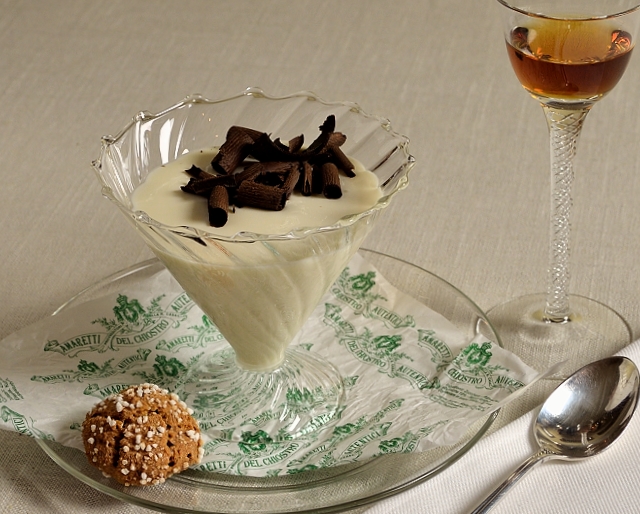
Amaretto Panna Cotta

Well, I am back to The Panna Cotta Diaries. I was in the mood. Comfort food. Easy comfort food. For me, that’s Panna Cotta. I decided to use Amaretto, and not just any Amaretto – Luxardo Amaretto di Saschira. If you have never tasted this brand, then you have never tasted Amaretto, the “little bitter” liqueur.

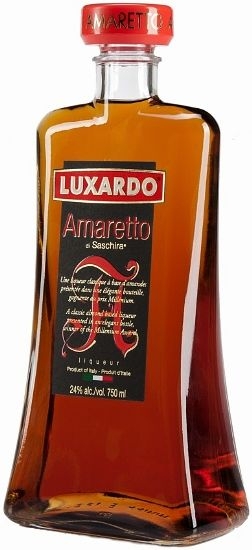
Amaretto
 
Luxardo uses the famous almonds from Avola in the province of Siracusa in the south of Sicily. Real almonds. Some say really the best almonds. Not all brands use almonds, much less the magnificent ones from Avola. Some use lesser quality nuts, peach pits or synthetic flavorings. I mention all this because until I tasted Luxardo, I did not care for Amaretto very much at all. If you think Amaretto is not for you, give the Luxardo a try. I bet that just as I did, you will change your mind.
 
 
The liqueur is a gorgeous clear amber. Open this sleek, slender bottle, and smell the heady scent of the finest marzipan. It is not as sweet as other brands, and the almond taste opens up as the liqueur wraps your mouth in a delicate blanket of almond. This is one luxurious liqueur, and it imparts the most extraordinary burnt sugar and almond flavor to this dessert.


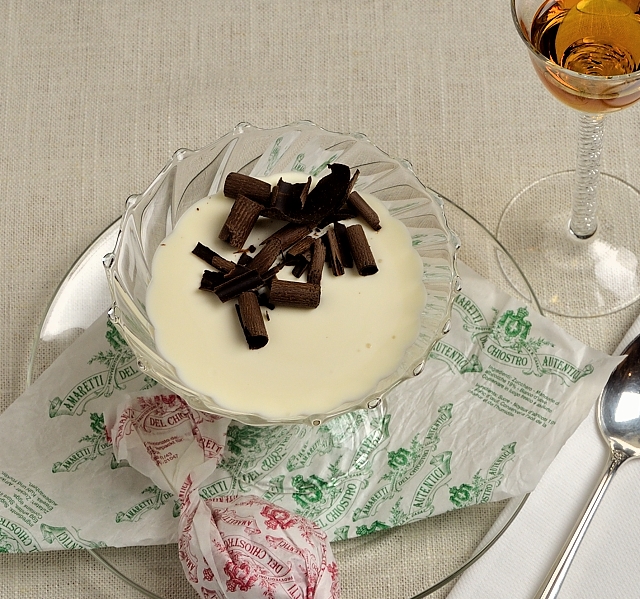
Amaretto Panna Cotta

Amaretto Panna Cotta

makes 6 1/2 cup servings

This Panna Cotta is just in time for elegant winter time dinner parties. I make it with a full 1/4 cup of Amaretto along with almond and vanilla extracts. Don’t skimp on the quality of liqueur. With this much Amaretto, you must use high quality spirits. Go for the good stuff, such as Luxardo. Ditto for the almond extract and vanilla extracts – use a fine brand such as Nielsen-Massey or Sonoma Syrup Co.
 
I tried several amounts of gelatin with this one. I started with 2 1/4 teaspoons, and the set was not firm enough. I upped it right to 3 teaspoons, and it was much too firm – a nerf ball comes to mind. I backed off to 2 ½ teaspoons – it was just a shade too tight, finally settling on a scant 2 ½ teaspoons. Remember though, the set on Panna Cotta is very much a personal choice. So feel free to change the amount up or down. but just remember that you will not need to change it very much. Unless you want a nerf ball, that is. For a photo essay on how to make Panna Cotta and information on how to treat gelatin, see my post on Espresso Panna Cotta.

1 1/2 cups heavy cream
1 1/4 cups whole milk, divided
1/4 cup Amaretto
1/4 cup granulated sugar
scant 2 1/2 teaspoons powdered gelatin
1/2 teaspoon almond extract
1/4 teaspoon vanilla extract
chocolate curls to garnish

Pour 1/4 cup milk in shallow bowl. Sprinkle gelatin over milk and soften five minutes. Be sure all the gelatin comes in contact with the milk – otherwise it will not soften properly.

Pour cream, remaining 1 cup milk and sugar in medium saucepan. Stir to combine. Over medium flame, heat to scalding. Do not let mixture boil.

Remove from heat, add softened gelatin, stirring to combine thoroughly. Continue stirring until gelatin has dissolved. The mixture should be quite smooth.

Strain mixture into clean bowl. Add Amaretto and extracts and combine thoroughly.

Set bowl over an ice bath. Stir frequently to promote even cooling until mixture develops the consistency of high-fat heavy cream.

Pour into serving glasses. Cover with plastic and refrigerate 2 hours or overnight.

Garnish with bittersweet chocolate curls for service.

A note: I like to cool the Panna Cotta until it thickens somewhat. That way when I move it from my counter to the refrigerator, it does not shift in the serving glass and I get a perfectly even line of Panna Cotta in the glass. Do avoid the pitfall of letting it get too thick. You will wind up with an uneven surface. I know. I know. Picky, picky.

Amaretto Panna Cotta


Note: You can click on any picture for a larger image, and to see a slide show!

I have no affiliation with any product, manufacturer, or site mentioned in this article.
Print Friendly, PDF & Email
6 Comments so far. Join the Conversation
Content Protected