Recipes Archive

More with Pace da Poggio Etrusco Extra Virgin Olive Oil

Fava-Pea-Ricotta-Crostini


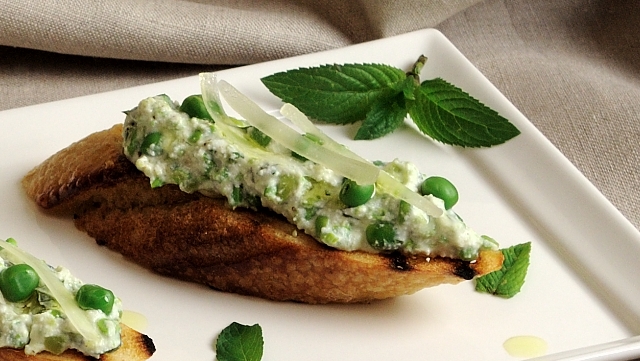
The baby vegetables are in the Farmer’s Markets. The herb garden is planted, and tiny peas in their pods have made an appearance. My mint plants are already giving forth, their new leaves packed with fresh flavor. Spring has arrived, and with it have come the fava beans.


Travails with Fave or Size Does Matter

Vicia-Faba


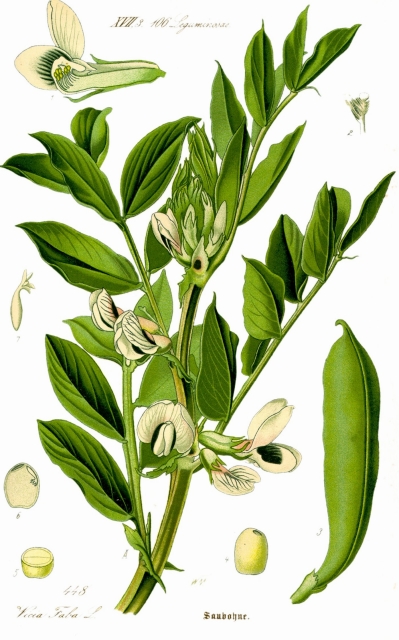
Preparing fave (FAH-vay, plural of fava) is a labor or love, or so some people say. The preparation of this member of the Fabaceae (bean family) is a point of great contention among the cooking community and for a time, a source of plunging self-esteem for me. To peel or not to peel? That is the question. The Great Fava Bean Debate of 2013 rages on. For years I labored (or not, depending on one’s point of view) in blissful ignorance of the aforementioned debate, happily zipping open the fava pods, removing the tiny beans from their downy resting spots and eating them. For me there was no third step. You know the one, the part where you peel the beans.


In the garden or at the market I selected firm, bright green pods, free of marks or blemishes. Patient harvesting or careful shopping rewarded me with tiny beans, sweet and tender, about the size of my little fingernail. I never bothered with the larger beans, having always thought them better suited to the compost heap than a diner’s stomach.


However there came a point at which I realized that everyone, food writers and friends alike, even food writing friends, was talking about peeling the fave. A terrible unease set in, the kind of self-doubt in which I specialize. Could I possibly be so rustica, so out of touch with civilized culinary technique? It seemed that everyone peeled those little beans before consuming them, whether raw or cooked. Then one day just a few weeks ago I was rescued from the ignominy of bean preparation inadequacy by none other than food writer Nancy Harmon Jenkins. She came down on the side of not to peel. Despite some formidable opposition, chief among them Paula Wolfert, Nancy stuck to her guns. There is no need to peel, she declared. It is simply a matter of knowing how to pick fave, and you should pick them young. Thanks, Nancy. A girl needs her heroes. Read more… »

Print Friendly, PDF & Email
34 Comments so far. Join the Conversation

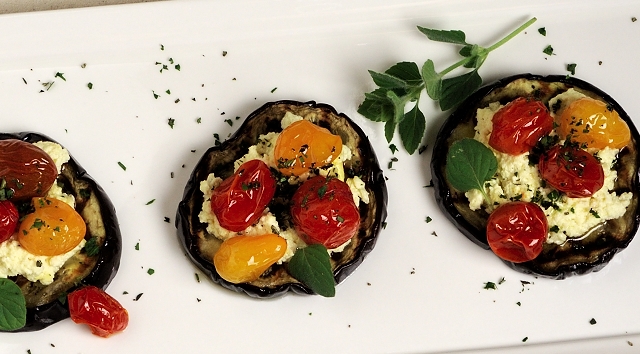
Eggplant with Roasted Tomatoes, Baked Ricotta and Herbs


Eggplant-Roasted-Tomatoes-Ricotta


Man has cultivated the olive tree for thousands of years. The Roman Empire depended on olive oil for everything from perfumes and personal hygiene to cooking and lighting.


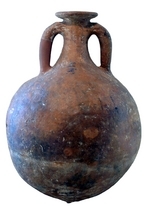
amphorae

Courtesy: Nacional Arqueològic de Tarragona (Dottsa Pilar Sada) David Williams

Rome’s oil came from the far flung parts of the Empire, and the terra cotta containers that held it, known as amphorae, were inscribed with tituli picti, markings that certified the oil’s place of origin, owner, weight and other particulars. The Romans knew where their oil came from and you should too. How can the average consumer, inexpert at discerning the quality of oil he or she is purchasing, get good oil? I have said it before. Either know your grower or know your seller. Fortunately for me, I know both. Among a box of oils I received for review from Olio2go, one of the country’s largest sellers of Italian extra virgin olive oil was a tin of liquid gold, Pace da Poggio Etrusco Extra Virgin Olive Oil made by Pamela Sheldon Johns.


Pamela is a well known food writer, cookbook author, and cooking teacher. With her husband, artist Johnny Johns she operates Poggio Etrusco bed and breakfast and working farm in Montepulciano, Tuscany. On her organic certified farm property she grows the Moraiolo, Leccino, Correggiolo, and Pendolino olives that go into the oil. In November it is time for la raccolta delle olive, the olive harvest, when Pamela, her family and crew, and even guests, pick the fruit (yes, olives are fruit) entirely by hand. The careful harvesting, free of rakes and machines, assures that the fruit reaches the frantoio, the olive pressing mill, unbruised and in good condition, resulting in a pure, fresh tasting oil. Pamela’s hands on approach to the manufacture of her oil is a mixture of science, hard work, and respect for tradition and the earth. Read more… »

Print Friendly, PDF & Email
48 Comments so far. Join the Conversation

A Culinary Comedy of Errors and Experimentation
Adri’s Great Blog Cook-a-thon #7


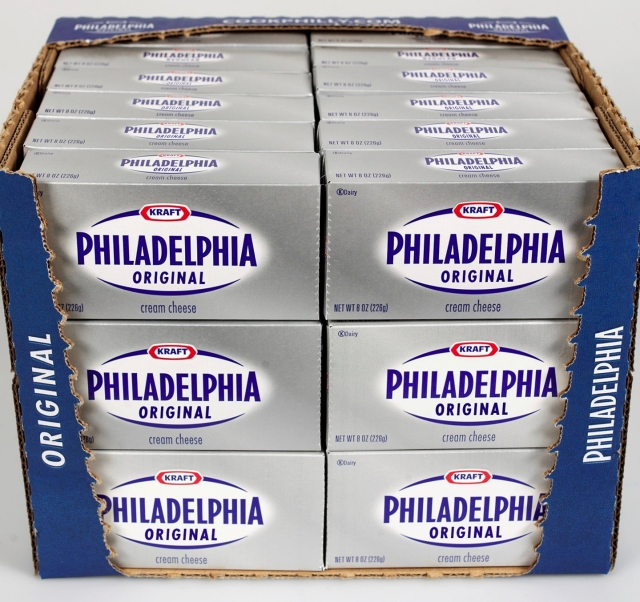
Cream Cheese


This is the story of three women, eleven pounds of cream cheese and two Popes.


Pope01-509x640-1199Pope02-509x640-1201


It started innocently enough when I read a post by Trisha Thomas, AKA Mozzarella Mamma. “Dear Blog Readers — I’m seeing RED. I’ve become obsessed with Cardinals. I am constantly contemplating Cardinals.” It was mid-February 2013, and Trisha, an APTN reporter in Rome was covering the retirement of Pope Benedict XVI and the Conclave that would elect his successor. That’s where the two Popes come in.


The third woman is Linda Prospero, author of the Italian food site Ciao Chow Linda. She too reads Mozzarella Mamma. There we were, connected online by a mutual love of Italian culture and food and an interest in i papabili (men likely to be elected Pope.)

Read more… »

Print Friendly, PDF & Email
36 Comments so far. Join the Conversation

Agrumato Lemon & Herbs Extra Virgin Olive Oil

Posted April 16, 2013 By Adri

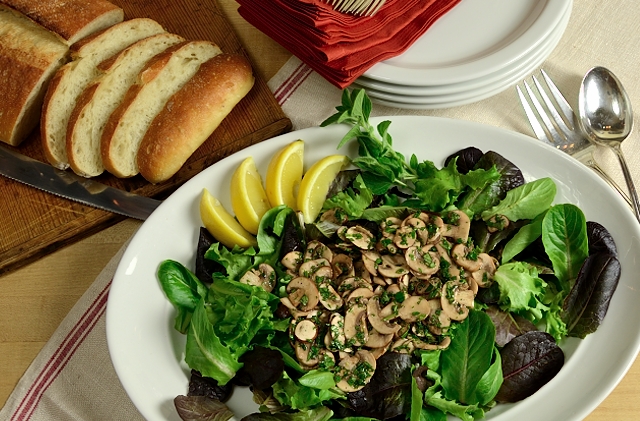
Fresh Mushroom Herb Salad


Mushroom Herb Salad MS


Many people, when asked to name olive oil producing regions of Italy, do not immediately think of Abruzzo. This pastoral region set in central Italy east of Rome is well known for its spectacular vistas, majestic mountains, and expanse of Adriatic coastline. Yet olive trees and grape vines cover Abruzzo’s mountain slopes, and for thousands of years olive oil has played a crucial part in the culture and cuisine of the region. The truth is Abruzzo produces excellent oil, and each year more and more is being exported to the United States and other countries.

Agrumato Lemon Oil Bottle


I recently received a bottle of Agrumato (ah-gru-MAH-to) Lemon and Herbs Extra Virgin Olive Oil for review from Olio2go, an online and brick and mortar retailer of Italian extra virgin olive oils, vinegars, and food products. This mild, yet flavorful oil is made from Gentile di Chieti, Leccino, and Olivastra olive cultivars. It comes from the Ricci Family of Lanciano, an area well known for its citrus oils. There is a long standing tradition in the area of pressing the last of the autumn olives along with lemons. The acidity of the lemons cleans the press and the oil is traditionally shared with family and friends. Because the olives are pressed simultaneously with the ripe lemons the oil exhibits a remarkable harmony of flavor. The sunny lemon oil is infused with garlic and oregano to create a sophisticated marriage of clean citrus flavor and aromatics. Read more… »

Print Friendly, PDF & Email
20 Comments so far. Join the Conversation

Cicerchie and Black Kale Soup

Posted April 9, 2013 By Adri


Cicerchie-MS-Kale-Soup


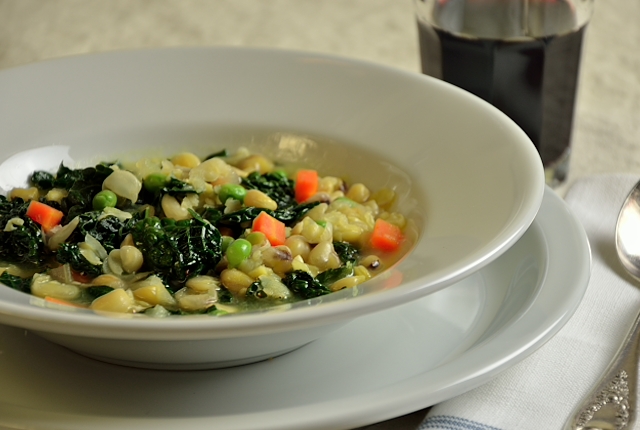
What beans! What character! The humble cicerchie, Lathyrus sativus, with their hearty flavor have been a character on the world food scene for thousands of years. Paleobotanists have determined that cicerchie came to ancient Rome from Greece, having first made their way from the Near East along the northern coast of the Mediterranean. The ancient Romans called the legume cicercula, and the march of the Roman legions was fueled on soup made from them. Because cicerchie grow well in high altitudes and cool climates they have traditionally played a large part in the cuisine and farming of the central and southern Apennines, especially Abruzzo where they sustained the poor through good times and bad. Cicerchie farming and consumption decreased after WW II, but a resurgence is underway, thanks to the burgeoning interest in traditional foods and sustainable agriculture both in Italy and worldwide.


ODAP-Molecule


However, cicerchie have one characteristic that sets them apart and is worth addressing. They contain the neurotoxic amino acid Read more… »

Print Friendly, PDF & Email
24 Comments so far. Join the Conversation

Make Your Own Spinach Garganelli

Posted April 2, 2013 By Adri

Handmade Garganelli with Beef Ragù


Spinach Garganelli with Ragu


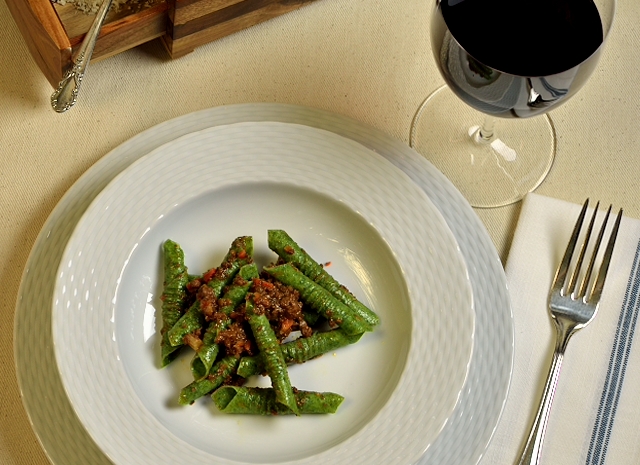
The calendar says Spring is here, but the mercury remains low. I wanted some hearty food, and that means ragù around here. I felt like some handmade pasta too, so I opted for garganelli, tube shaped pasta with ridges, a perfect match for any sauce. Whether delicate or hearty, the sauce bathes these handmade beauties inside and out, coating them and clinging to the ridges, delivering maximum flavor with every mouthful. Read more… »

Print Friendly, PDF & Email
40 Comments so far. Join the Conversation
Content Protected