Nutella Coffee Cake

Posted January 5, 2011 By Adri

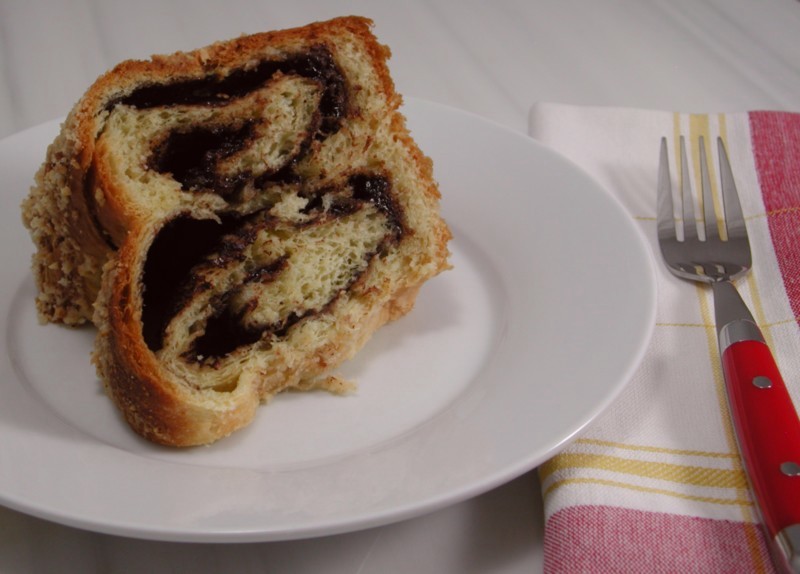
Nutella Coffee Cake Slice


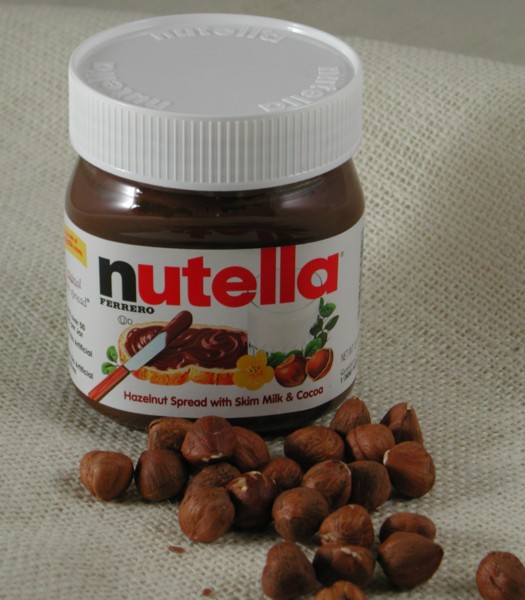
I like Nutella. I really like sweet yeast risen coffee cakes, the kind with a dough like brioche. And the other day I was craving a sweet coffee cake. Can you guess what’s coming? Just in time for Little Christmas, it’s Nutella Coffee Cake, of course. Nutella, that delicious concoction of hazelnuts and cocoa seems to go with just about everything in the bakery department. Developed during World War II by Pietro Ferrero, it was originally supplied in a foil wrapped loaf called pasta gianduja. Over time the formulation was changed to the spread we know today and it became known as supercrema gianduja. And in 1964 the name was changed to Nutella. It has been sold in the United States since 1983, and in recent years it has become extremely popular. With good reason, I’d say. I think of it as the Italian answer to peanut butter. Check out the Nutella USA web site and enter the Nutella Monthly Case Sweepstakes to win a case of Nutella. Oh, one thing more, when you open a jar of Nutella don’t throw away the gold seal. Collect them to use to redeem cool Nutella stuff like tee shirts, mugs and more. Really. I mean how good does life get?

Nutella


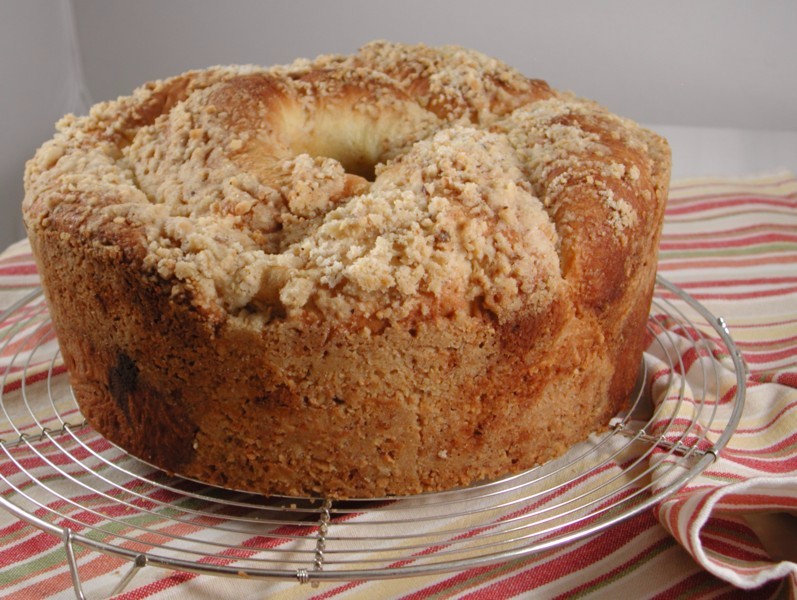
Many cultures have sweetened filled yeast breads; Italians have their nut filled Gubana from Friuli, Eastern Europeans have Babka typically filled with nuts and dried fruit while Jewish bakers fill their Babka with chocolate or cinnamon and crown it with streusel. Now I have Nutella Coffee Cake, a sumptuous brioche-like concoction filled with Nutella, rolled up, twisted, plopped in a pan, topped with streusel and baked to tender yeasty sweet-filled perfection.


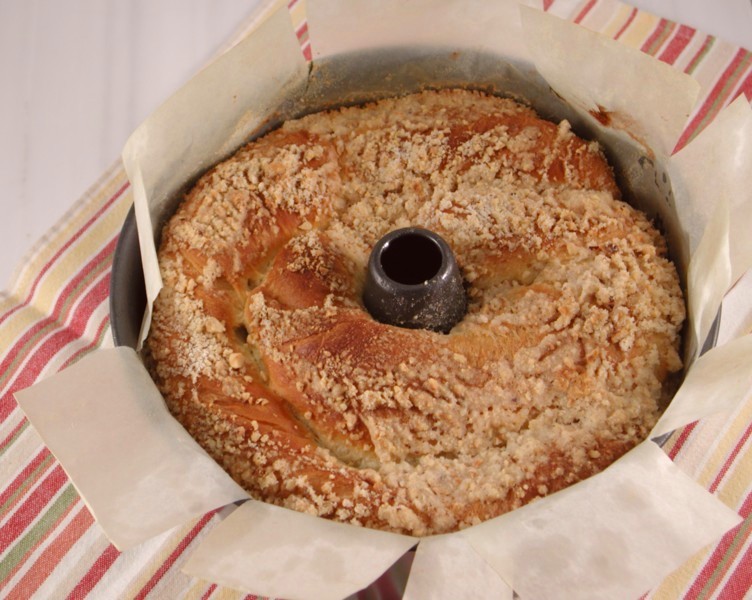
I started with a sweet brioche-like yeast dough, rolled it out in 2 batches, just to make it easier to put it in the pan, spread each piece of dough with half a jar of Nutella, rolled them up jelly roll style, gave them a twist and put them in a tube pan. I figured that although I was craving something sweet, maybe, just maybe the Nutella along with the sweet dough would be too much. So I opted for buttermilk, just to give the dough a bit of a tang to counteract all that sweetness. Then I got to thinking I needed maybe just a little something more than the dough and the Nutella, something more on top perhaps. The idea of a streusel sounded darn good to me. I went with it. Once the dough was in the pan, I spread some butter on top and sprinkled it with a streusel of sugar, flour, butter and, in a nod to the Nutella, toasted hazelnuts. This is for those who are serious about their Coffee Cake.

Nutella Coffee Cake


For those of you who do not make yeast breads, fear not. Do not be daunted by the thought of working with yeast. I use SAF Instant Yeast, a baker’s dream. No dissolving, no worrying about the temperature of your liquids and no proofing. Just mix it in with the dry ingredients and you are ready to go. SAF Gold Instant Yeast is particularly good for use in sweet breads. Baked goods with lots of sugar can take forever to rise. Why? The sugar attracts the water and the yeast can not get any. Thirsty yeast will rise slowly. The yeast in SAF Gold needs less water, thus no conflict in your dough, only peace, harmony and a most remarkable rise. You will love it. You may not find it on your grocer’s shelf, however it is available from the King Arthur Baker’s Catalogue, along with just about every other cool item for baking.


I have called for 00 flour because I love the soft, tender dough I get when I use it. If you do not have it, you will still get a wonderful result with all-purpose flour. For more info on 00 flour, see my post on Crostoli.


A word about the hazelnuts – you will need to toast and skin them. Toasting brings out their wonderful flavor and allows you to skin them with some degree of ease. To toast the nuts, place them on a rimmed baking sheet in a 325 degree oven for ten to twelve minutes, stirring the nuts once or twice. Remove them from the oven, place them in a kitchen towel and rub them vigorously to remove as much of the skins as you can. You will never be able to remove all of the skins, and that is alright. Toasting and skinning is an important step because if left on, the skins will impart a bitter flavor to your final product.


I like to use a 2 piece non-stick angel food cake pan for this coffee cake. Even though I direct you to line your pan with parchment paper, the added benefit of a non-stick pan makes it that much easier to remove the coffee cake. If you are not familiar with yeast breads and rolled coffee cakes, this might all seem like a bit of a challenge, but press on. Your efforts will be rewarded and after you have made it once you will wonder what all the fuss was about. A nice thing about this recipe is you can do the second rise in the refrigerator overnight. You can even make the streusel days ahead and keep it in the freezer until you are ready to use it.


When you assemble this coffee cake you may find that the ends of the dough do not meet, especially with the second piece of dough that will lay around the outside of the pan. Do not worry. Do not fuss. Just place the dough pieces in the pan so that the ends of one piece are on the opposite sides of the pan from the ends of the first piece. The dough will rise sumptuously, you will have luscious pockets of Nutella, and your Coffee Cake will have character.


I hope you try this Coffee Cake. It is just as good the day after as it is the day you make it. Do not think of this as a lot of work, but rather several steps. And since all you have to do for the filling is open a jar of Nutella, it is almost easy. (I have to be careful saying a recipe is easy. My sister Toni never believes me.) Try this one. It’s great for breakfast or brunch, and it is just in time for Little Christmas. I bet that like me, you will leave your fork on the table and pick it apart with your hands.

Nutella Coffee Cake

Nutella Coffee Cake


Nutella Coffee Cake


makes one large 10 inch coffee cake


For the dough:
2 3/4 cups 00 flour
1/3 cup sugar
2 1/2 teaspoons instant yeast
1/2 teaspoon kosher salt
1/2 cup buttermilk, at room temperature
2 whole eggs
1 egg yolk
1 teaspoon vanilla extract
4 ounces (1 stick) unsalted butter, very soft, cut into 16 pieces
2 tablespoons unsalted butter

extra butter for bowl and pan
flour for dusting work surface

For the streusel topping:
1/2 cup 00 flour
1/3 cup hazelnuts, toasted and skinned, about 2 ounces
1/4 cup granulated sugar
4 tablespoons unsalted butter, diced and chilled

For the filling:
1 13-ounce jar Nutella

To make the dough: combine flour, sugar, instant yeast and salt in mixer fitted with paddle attachment and mix briefly to combine. With mixer on low, add buttermilk, whole eggs, egg yolk and vanilla. Beat until dough comes together. Remove paddle and switch to the dough hook. Beat medium-low until dough is shiny and elastic, about 10 to 12 minutes.

Add one stick of the softened butter, piece by piece, blending completely after addition. Beat on low for about 5 minutes, until dough is smooth and elastic. Place dough in buttered bowl. Cover with plastic wrap and set aside in a warm, draft-free area. Let rise until doubled, about 2 hours.

When dough has doubled in size, remove plastic. Press dough down. Cover tightly and refrigerate at least 2 hours or overnight.

To make streusel topping: place flour, hazelnuts and sugar in bowl of food processor fitted with steel blade. Pulse briefly to coarsely chop nuts. Add butter and pulse briefly to form a crumbly mixture. Place streusel in freezer until ready to use.

Butter the bottom and sides of a 10″ angel food cake or tube pan, preferably with a removable bottom. Line bottom and sides of pan with parchment paper. Butter parchment paper.

Divide refrigerated dough in half. On a lightly floured surface, roll one half of the dough into a 13 x 8-inch rectangle. Use an offset spatula to gently spread half the Nutella over the rolled out dough to within 1/4 inch of the edges. Trim edges. Beginning at long end, roll up tightly as for jelly roll; pinch seam to seal. Holding one end of the roll in each hand, carefully twist the roll several times to make a spiral. Nestle dough in prepared pan, wrapping dough around central core, leaving ends loose. Repeat with the remaining dough and Nutella; place second roll in prepared pan, arranging it around the outer perimeter along side the first roll with the ends of the second roll on opposite sides of the pan from the ends of the first. The coffee cake will rise a bit unevenly. Don’t worry. I don’t. And by leaving the ends loose you will get some terrific pockets of Nutella in your finished Coffee Cake.

Melt remaining 2 tablespoons butter and brush it over the dough. (If your butter is very soft, you can spread it over the dough.) Sprinkle streusel mixture on top of dough. Cover with plastic wrap and let rise about 2 hours, until doubled in size.

Preheat oven to 350 degrees. Place tube pan on a baking sheet and bake in center of oven about 45 to 50 minutes, until a cake tester inserted in the center of comes out clean. Cool pan on a wire rack for at least 30 minutes before removing coffee cake from the pan and serving.


Note: You can click on any picture to see a slide show!

Print Friendly, PDF & Email
7 Comments so far. Join the Conversation

Brown Sugar Shortbread

Posted December 18, 2010 By Adri


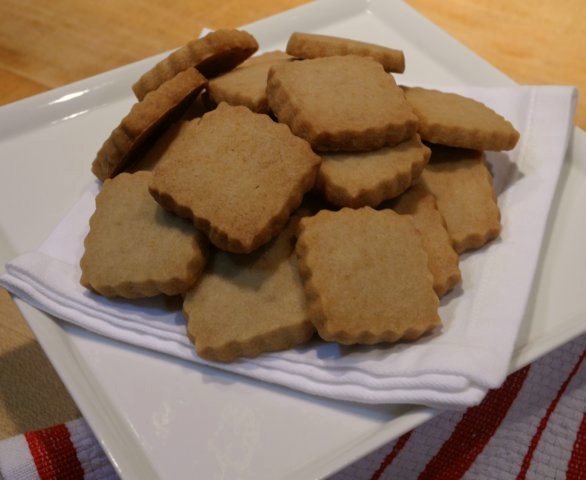
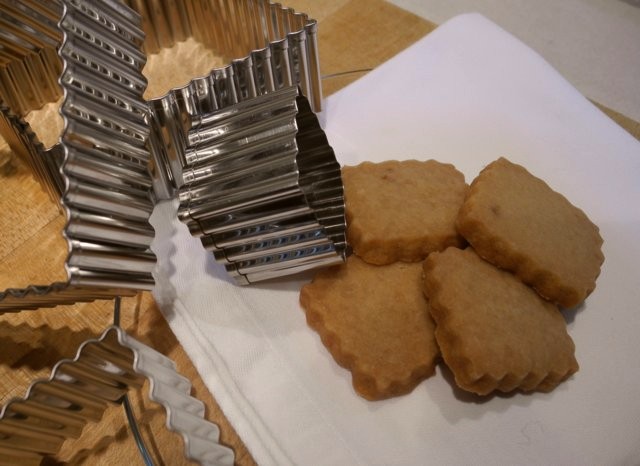
Brown Sugar Shortbread


My sister Toni and I were out yesterday and we stopped in at the latest iteration of L.A.’s famous Sweet Lady Jane bakery. Three weeks into their tenure at 1631 Montana Avenue in Santa Monica, and the joint was jumpin’. People everywhere, buying, eating and enjoying. I was craving a treat, so I grabbed a piece of SLJ’s Brown Sugar Shortbread. It was divine, a tiny coin of a cookie, but packed with flavor. The problem with buying only one cookie, especially one as good as Sweet Lady Jane’s – one is never enough. Will I never learn? So this afternoon I got busy in my kitchen and made my own version. This cookie is buttery and tender, not too sweet, but definitely brown sugar, definitely molasses. And like all shortbread, it is both a keeper and a traveler. These cookies would be a welcome addition to any Holiday cookie tin or table. Buon Natale!


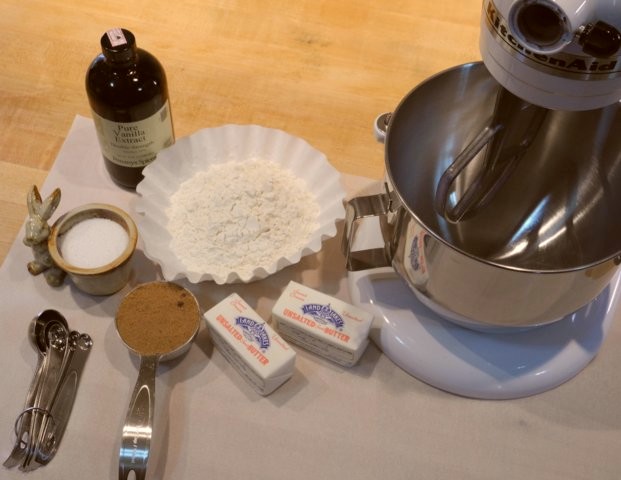
Ingredients


Brown Sugar Shortbread

makes 5 ½ dozen 1-inch squares

1 cup (2 sticks) unsalted butter, softened
½ cup dark brown sugar
2 cups all-purpose flour
½ teaspoon vanilla extract
½ teaspoon kosher salt

In The Oven


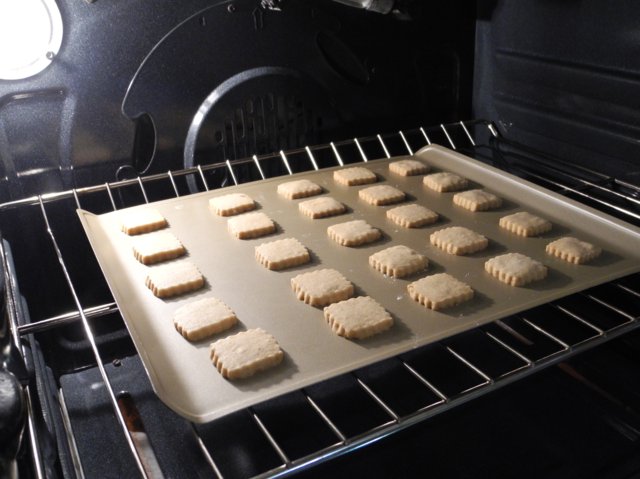
Preheat oven to 300 degrees.


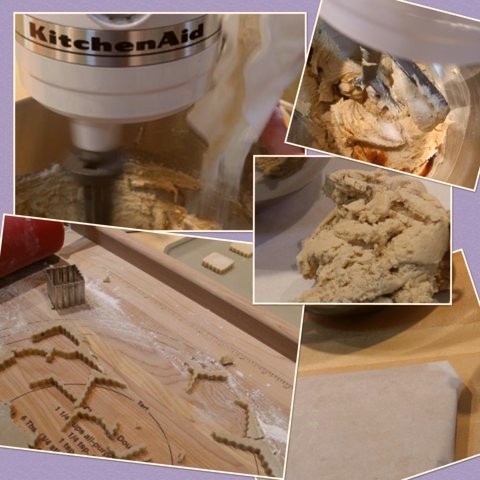
Place butter in bowl of KitchenAid mixer fitted with paddle. Beat until creamy, 3 to 4 minutes.


Add brown sugar, vanilla extract and salt and combine well.


Add flour in 3 additions. Beat until just combined.


Turn dough out onto parchment. Form into block, wrap and place in refrigerator 30 minutes.


Cut dough in half, and working with one piece at a time, roll out to 1/4 inch thickness on a lightly floured board. Cut into 1-inch squares or other shape. Gather and reroll scraps. Place 1 inch apart on ungreased cookie sheets and bake on center rack 18 to 20 minutes or until lightly colored. Cool on racks.


Making Cookies


A note to all cooks: if you want to make these cookies (which of course you will) but discover upon opening your pantry that you are out of brown sugar – do not despair! In your food processor combine 1 cup granulated sugar with 1/4 cup molasses and you’ve got brown sugar. Honest.


Cutters and Cookies


Note: You can click on any picture to see a slide show!

Print Friendly, PDF & Email
1 Comment. Join the Conversation

Palle di Neve – Italian Christmas Cookies

Posted December 13, 2010 By Adri

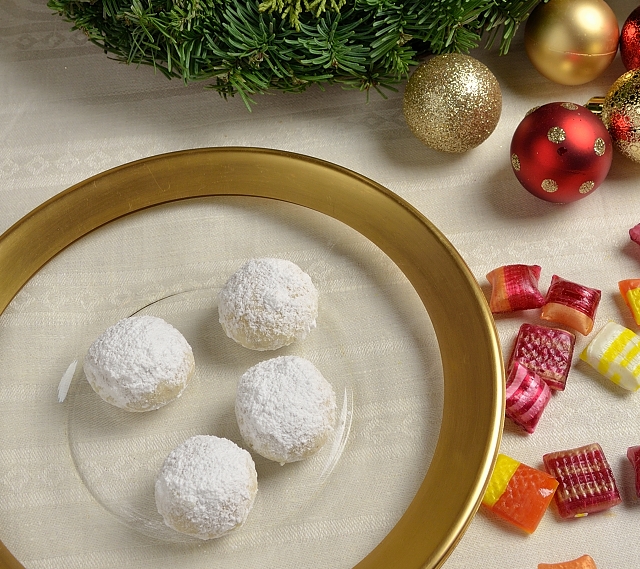
Palle di Neve


Palle di Neve, Snowballs, Russian Teacakes, Mexican Wedding Cakes – call them what you will, these cookies are great. Palle di Neve is Italian for snowball – some say these cookies remind them of the snow topped Alps. Okay. I’ll buy that. These cookies have a lot going for them. They are buttery and tender and bursting with the flavor of nuts. Once I start I can not stop eating them. And what’s more – you can make them in your food processor.


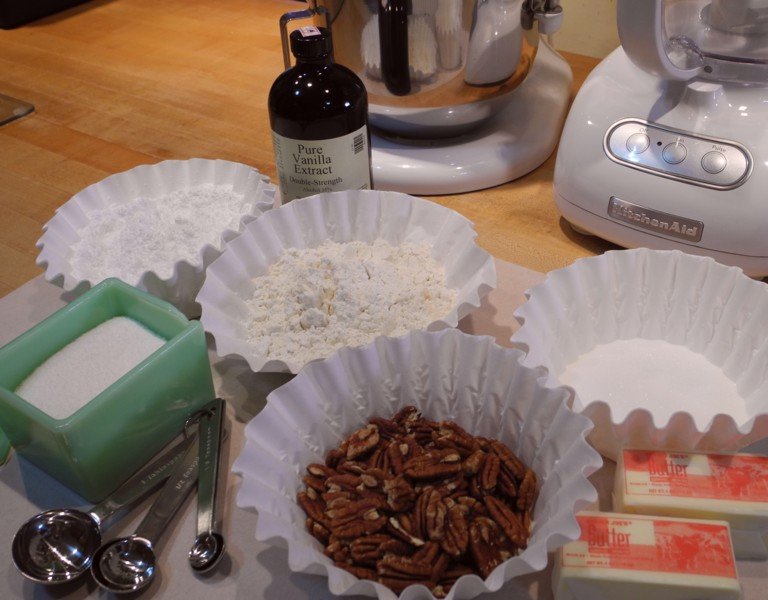
What you'll need


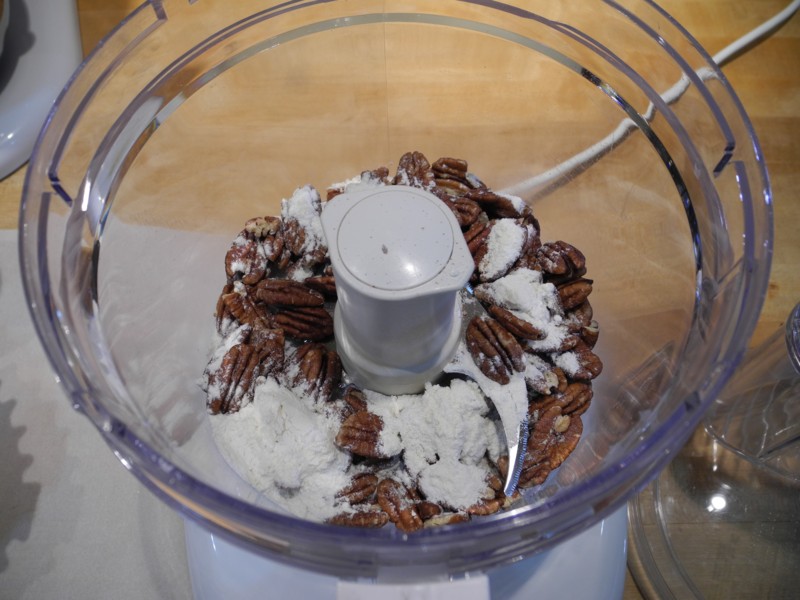
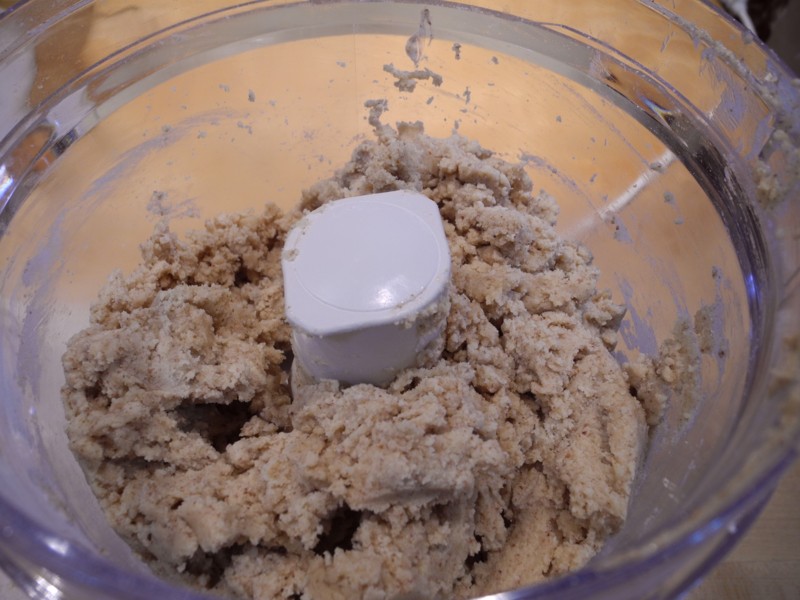
A few points about the nuts – you can use any nuts you please. I have called for pecans, but walnuts, hazelnuts (a favorite in Italy), pistachios and even Brazil nuts are all great. Use what you have in your freezer (yes, store nuts in your freezer. They will remain fresh much longer that way.) For a greater depth of flavor, toast the nuts. Don’t be put off by the toasting step. It is quite simple. Place the nuts on a baking sheet (preferably with sides!) and toast on the middle rack of a preheated 325 degree oven. For this recipe you want to toast the nuts until they just become fragrant, about 6 to 8 minutes. Remove them from the oven and let them cool. Done. Easy step. Last thing – you need to know how to chop them in a food processor. As efficient as the food processor is, you can quickly go from finely chopped nuts to nut paste. Nut paste is a step too far for these babies. To guard against over processing (and this is true for any recipe) place some of the flour or sugar called for in the recipe in the bowl of the processor with the nuts. Then pulse the processor several times until the nuts are the desired consistency. For this recipe place 2 tablespoons of flour in the work bowl along with the nuts. You will never go wrong if you use this method.


The Nuts

The Nuts

The Dough

The Dough


Scooping the Dough

Scooping the Dough

Dusting with powered sugar

Dusting with powered sugar

This recipe is extremely versatile. As I mentioned, you can use just about any nut that strikes your fancy. About the spice factor – I have called for cinnamon, but you may omit it if you wish. These are great without any spices, but since it’s Christmastime, go for the tastes of the season. Try 1/4 teaspoon of nutmeg or 1/8 teaspoon ground cloves or allspice. And don’t forget cardamom, one of the most neglected spices of all; add ½ teaspoon for an old time flavor. If you are using walnuts, try adding ½ teaspoon of maple extract. For a wide array of fresh and fragrant spices try Penzeys Spices. You can shop online at Penzeys.com, and they have brick and mortar stores throughout the United States.


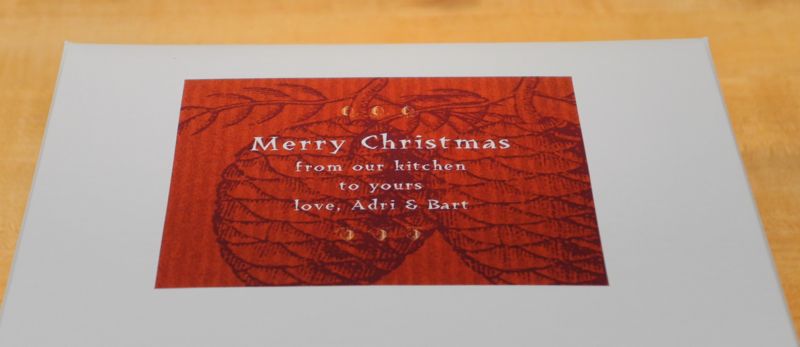
These cookies are a Christmas favorite. As good as these cookies are the day they are baked, they are even better the next day, once the flavors have had time to marry and mellow. They store well in an airtight container and are a most welcome addition to any holiday cookie exchange, cookie plate or gift box. Buon natale!


Palle di Neve


makes about 80 cookies


1 rounded cup pecans, about 5 ounces
2 cups plus 2 tablespoons all-purpose flour
1/4 cup plus 3 tablespoons granulated sugar
1/4 teaspoon cinnamon
generous pinch kosher salt
1 cup unsalted butter, softened
1 teaspoon vanilla extract


2 cups powdered sugar, to coat cookies


Preheat oven to 325 degrees. Spread pecans on a rimmed baking sheet. Toast on center rack until fragrant, about 6 to 8 minutes. Cool.


Place cooled pecans and 2 tablespoons flour in workbowl of food processor fitted with steel blade. Pulse several times until nuts are finely chopped. Add sugar and salt. Pulse to blend. Add cinnamon. Pulse to blend. Cut butter in chunks, and add to processor. Pulse until mixture is creamy. Scrape sides down. Add vanilla and pulse to blend. Add flour. Pulse several times until mixture begins to clump. Remove mixture from processor, and place on parchment or plastic wrap. Form into a block. Wrap and refrigerate 30 minutes or up to 1 hour. Well wrapped, dough may be frozen for up to one month for later use.


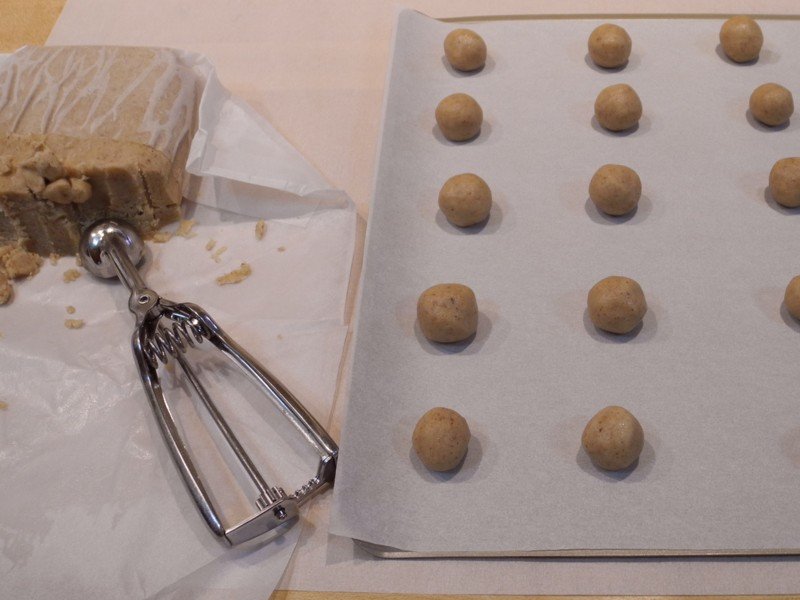
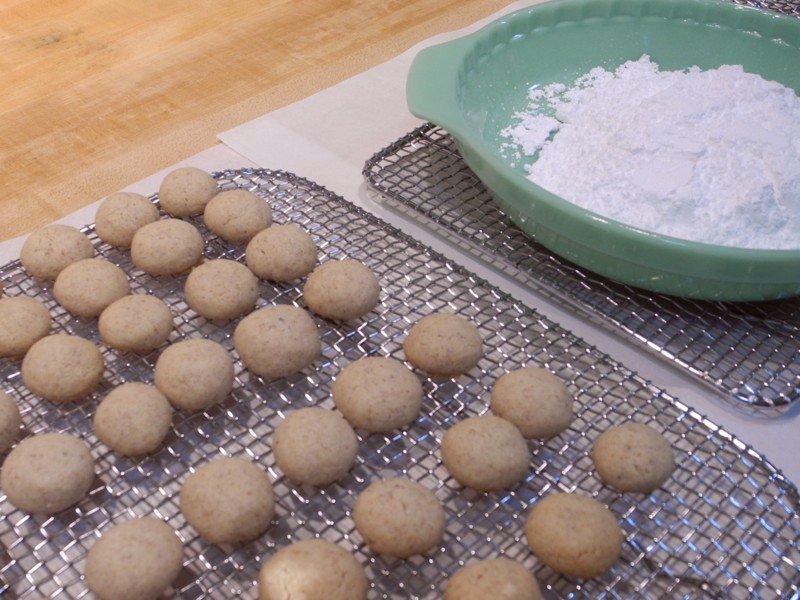
Increase oven temperature to 350 degrees. Line cookie sheets with parchment. Form dough into ½- inch balls. Place balls 1½ inches apart. Bake on center rack until firm and slightly browned on bottom, 10-12 minutes. Cool cookies. Roll in powdered sugar.


In the box


Note: You can click on any picture to see a slide show!

Print Friendly, PDF & Email
Be the first to comment

Dad’s Favorite Dishes

Posted October 14, 2010 By Adri

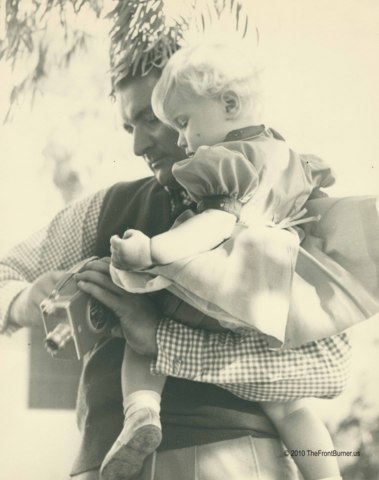
Dad and Me


Pasta Fazool. Pasta Fazoo. Pasta fa Zuole. Pasta e Fagioli. Italians call it a lot of things. My dad, Bill Crocetti, called it delizioso. He used to make his own. Nope, this dish was not entrusted to my mother. Uh uh. Funny how you can want a dish just so. That is when you have to make it yourself. So at the stove stood my dad cooking up a memory of his childhood. Now, as an adult I understand the contented look on his face as he breathed in the perfume of the garlic cooking in the olive oil, his olfactory senses transporting him back to his childhood kitchen over his father’s barbershop in Steubenville, Ohio. That is how it was for my dad where Pasta e Fagioli was concerned. As far as I can remember it was all his, start to finish. To me as a kid, I thought it an odd, unattractive dish. The garlic, the oil, the parsley, the tiny little pasta, I wanted something red in there. Give me tomatoes, Daddy, please! Well, then it would not have been his Pasta Fazool. Yes, it is that simple. Again the tradition of mille nonne, a thousand grandmothers, is at work. No two families make it the same way. Period. Some cooks use crushed or canned tomatoes in their Pasta e Fagioli – in the heart of the Mezzogiorno the broth is kissed with a dollop of tomato paste giving it a slightly pinkish hue. My dad preferred just a bit of pasta water, so little it was not a soup, but rather a hearty bean and pasta dish. Even within my dad’s family there were variations. His brother preferred a version more akin to a soup with a tomato base. Not so my father. It was beans and pasta. Pasta Fazool. That’s what he called it, and that is what it was. And the pasta, well that depended on what was in the cupboard. It could be ditalini, maybe elbow macaroni, maybe orecchiette, maybe tubetti. It was cucina d’opportunita – use what you have. Another of his specialties was Spaghetti Aglio e Olio, Spaghetti with Garlic and Oil. This is simple food straight from the south of Italy, and along with dishes like Pasta e Fagioli and Cacio e Pepe, is man food, the kind of dishes men cooked up when left by themselves. My dad’s Aglio e Olio was classic. He poured olive oil into a frying pan. (We never called it a skillet and certainly not a saute pan. We’re talking the fifties here.) He sliced the garlic, lots of it, tossed it in the pan and let the whole thing heat up, cooking the garlic just until it was golden, the oil shimmering around it. Meanwhile a pound of spaghetti cooked on the next burner. Just before the pasta was done, and the garlic was just golden, he carefully poured some of the pasta water into the frying pan and let it boil a bit. I always stood back because, boy, did it ever bubble up. A quick draining of the pasta and into the frying pan it went, along with the parsley. A bit of tossing, a bit more heat, lots of parmigiano, and he was ready to eat.


My dad was happy in front of the stove. He made all manner of delights including the best fried eggs, uove frittellate, ever. His secret? Butter. Lots of butter and a lid for the frying pan. He put a half stick of salted butter in a small but well used Revereware frying pan, let the butter get spitting hot and slid in the eggs. A little salt and pepper and he was on his way. The sweet smell of butter cooking filled the kitchen. To this day I still love that smell. The yolks retained their gorgeous deep yellow color while the whites were utterly transformed. Little bubbles formed and then burst around the edges of the whites leaving behind a network of crispy brown lace that gave his eggs a distinctive crunch. He took a peek at the underside of the eggs, and if it had begun to brown, that’s when he put the lid on. Yup. The lid went on. It trapped the steam in the pan and finished cooking those glorious eggs. Oh, how I used to love it when he fried eggs for the two of us.


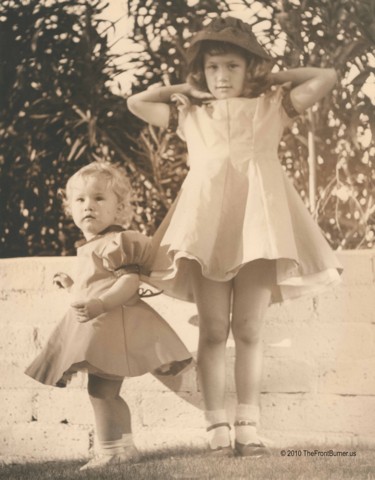
That's me on the left with Toni I was talking to my sister Toni the other day and the conversation turned to dad’s uove frittellate. Imagine my surprise as she spoke of the dish as though it were the sole province of her and dad. I thought it belonged to me and dad! Not until we had that conversation did I realize that he had ever made those eggs for anyone but me. He could make each of us feel like a princess while avoiding the trap of making the other daughter feel like a peasant. What a dad.


It was just so much fun to share food with him. Fried kidneys were our project from start to finish. No one else in our family was interested. Not in the least. They scattered, and we drove to the market together, asked the butcher for some kidneys and back home we came. The flavor and perfume of fried kidney is the rara avis of the culinary world. Unmistakable. I won’t attempt to describe it here. No one could do it better than James Joyce. But my dad was always able to make them without that je ne sais quoi Joyce so skillfully describes. I can still see the kidneys glistening in their wrapping, their burgundy fullness holding promise of delights to come. He sauteed them in butter, and I consumed them with gusto. And then one day I learned kidneys were “an organ,” and that was the end of the affair. In short order liver was also off my list. My dad, quite exasperated by my sudden refusal to eat organ meats asked my why. I replied “Because they are organs, Daddy. ” He looked at me and sternly said “Well, Adri a steak is a muscle.” Dead silence ensued. He realized he had made a fatal error. The very serious look on my face as I quietly ruminated on his pronouncement must have told him what was coming next. Adri, The Picky Eater was born, my gustatory adventures severely curtailed. As time went on, steak returned to my menu, but alas, kidneys never did. I bet my dad missed our kidney fests.


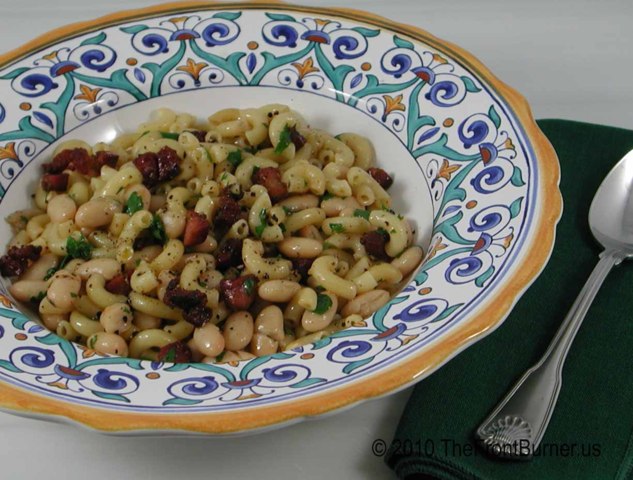
Pasta e Fagioli


Pasta e Fagioli

1 15 oz. can cannellini beans, rinsed

1/4 pound small pasta, such as orecchiette, pennette, tubetti, or elbows

2 tablespoons olive oil, plus more to finish

3 oz. pancetta, diced

2 cloves garlic, minced

generous pinch oregano

pinch red pepper flakes

1/4 cup chopped parsley

Parmigiano


Drain and rinse the cannellini beans. Set aside.


Bring a large pot of water to the boil. When it comes to the boil, generously salt the water and add pasta.


Meanwhile, pour 2 tablespoons of olive oil into a large saute pan. Cook diced pancetta over medium heat until it is crispy and brown. Just a moment before the pancetta is done, reduce heat slightly, add garlic, oregano and red pepper. Saute very briefly, until fragrant.


Add beans, pasta and parsley to the saute pan, tossing gently to coat, adding pasta water, if necessary, to loosen the mixture.


Turn the mixture in to a serving bowl. If desired, toss with a tablespoon of olive oil. Serve immediately with Parmigiano or Romano.


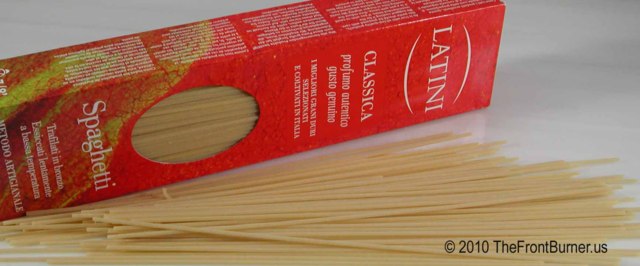
Latini Spaghetti


How to cook spaghetti

For one pound of spaghetti, or other long pasta fill a stockpot, pasta pentola or other large cooking vessel with at least 6 quarts of water, and bring to a rapid boil. Once the water has come to the boil, add a generous dose of sea salt, about 1 teaspoon per quart of water. As the saying goes “The water should taste like the Mediterranean sea.” When the salt is added, the water will bubble up, so do exercise caution. The water will come off the boil, but will shortly return. Once the water has returned to the boil, add your pasta to the pot. Do not break it. As it softens, use a wooden spoon or other utensil to push it down into the pot. Again, the water will have come off the boil. Cover the pot until it returns to the boil. Once it has begun to boil again, uncover the pot, stirring occasionally, until just al dente. Remember, the manufacturer’s cooking guidelines are only suggestions; taste the pasta occasionally, being sure it is no longer white in the center and is the consistency you desire.


My favorite brands of dried pasta are Latini and Rustichella d’Abruzzo. They are premium products and can cost upwards of $6.00 for one pound of spaghetti. Pricey, for sure. For a more affordable and very good product I turn to Del Verde, De Cecco and Barilla.


Premium pastas such as Latini and Rustichella d’Abruzzo are set apart by their use of high quality wheat, in some cases heirloom strains, and the use of bronze dies in the extruding machines. The dies impart a uniquely rough texture to the pasta’s exterior. Because the rough exterior allows the pasta and sauce to bind so well, it is a particularly good conveyor of the taste of the olive oil, a key ingredient in Aglio e Olio. Use of the bronze dies coupled with low temperature, long drying times combine to make these artisan pastas unique. I can’t imagine what my dad would have thought of using such expensive pastas for these two supreme examples of cucina povera. But today these dishes have been elevated far beyond the level of cucina casareccia, home cooking. For that matter I can just see that wry smile of his were he to look at a menu from any of today’s tony Italian eateries and see Aglio Olio, Cacio e Pepe or Pasta e Fagioli listed. “Ain’t that a kick in the head,” he’d say.


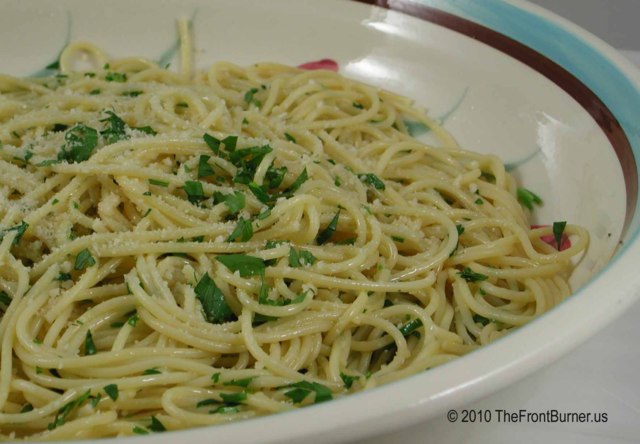
Spaghetti Aglio e Olio


Spaghetti Aglio e Olio

Olive oil takes center stage here. Be sure to use a good quality oil whose taste you really like. And go ahead – splurge on Parmigiano Reggiano, the pride of Italy. The cheese is manufactured to exacting standards in the Italian provinces of Parma, Reggio Emilia, Modena, Mantua and Bologna. Milk from local cows, whose diet is also regulated is used to make the cheese. You can be sure you are getting the real thing by looking at the rind of the cheese and making sure you see Parmigiano Reggiano in a repeating pin dot pattern.


1 pound spaghetti

1/4 cup extra-virgin olive oil, plus more to finish

3 or 4 large garlic cloves, thinly sliced

1/4 to 1/3 cup chopped parsley, to taste

1 cup grated Parmigiano-Reggiano, plus more for the table


Bring a large pot of water to the boil. Generously salt the boiling water and drop the spaghetti in. Do not break the spaghetti.


Pour oil into a saute pan. Set pan over medium heat and add garlic. Cook it gently, being careful it does not scorch or burn. If it burns, you must discard the contents of your pan and begin again. There is no salvaging burned garlic.


When the garlic is golden, add a cup of pasta water and boil to reduce it a bit. Be careful, water into hot oil splatters. Just before the pasta is done cooking add all of it to the saute pan along with the parsley. Cook gently, a minute or two, until the pasta is done, adding more pasta water if necessary to form a sauce that coats all the pasta. If it is too dry add a bit of pasta water, if there is too much water, increase the heat and reduce until it is the desired consistency.


Remove pan from heat, add cheese and a bit of olive oil, toss and serve at once.


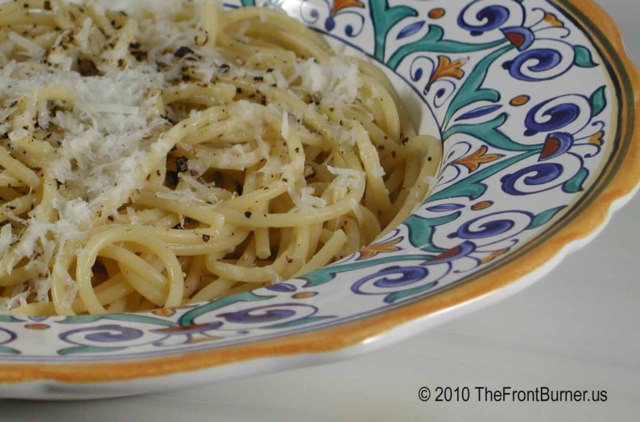
Spaghetti Cacio e Pepe


Spaghetti Cacio e Pepe


The assertive flavors of the Pecorino Romano and cracked peppercorns combine to make this simple dish greater than the sum of its parts. Pecorino is a ewe’s milk cheese (pecora is Italian for sheep), and is part of a group of cheeses formerly known as Cacio. It is lighter in color than other Italian grating cheeses, quite sharp and leans to the salty side. It is also one of the oldest cheeses produced in Italy.


1 pound spaghetti

1-2 tablespoons crushed black peppercorns

1 cup freshly grated Pecorino Romano, plus more for the table


Bring a large pot of water to the boil. Generously salt the boiling water and drop the spaghetti in. Do not break the spaghetti.


Meanwhile grind the peppercorns very coarsely. If you do not have a pepper grinder, crush the peppercorns with a saute pan, meat mallet or mortar and pestle.


Warm up a large pasta bowl. When the spaghetti is al dente, lift it from the pot, drain very briefly and put it in the warm pasta bowl. Quickly toss the pepper and 1 cup of cheese with the pasta, adding a bit of pasta water to help combine the ingredients.


Serve the pasta straightaway, with more cheese and pepper on the side.


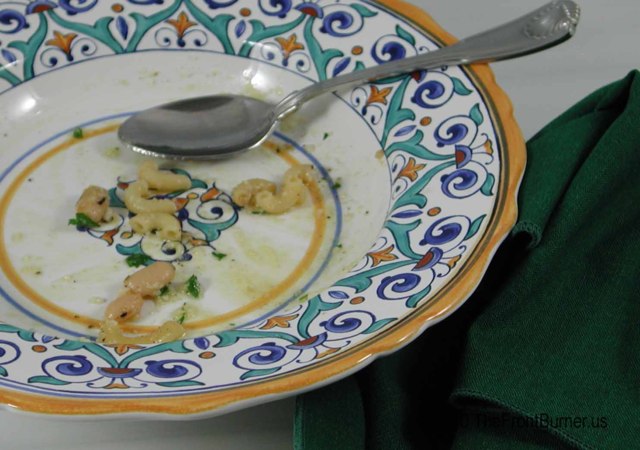
All gone


Note: You can click on any picture to see a slide show!

Pasta e Fagioli
Pasta e Fagioli

Pasta Cacio e Pepe
Pasta Cacio e Pepe

Print Friendly, PDF & Email
4 Comments so far. Join the Conversation

Eataly – and new friends

Posted October 1, 2010 By Adri

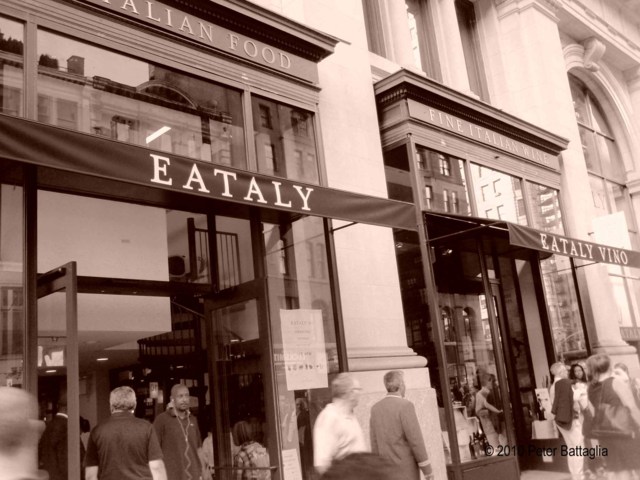
Eataly © Peter Battaglia


Maria Filice of Food & Fate wrote “What I love also about blogging is meeting other bloggers as we share and break bread…” I could not agree more. Pete Battaglia of A Food Obsession shot this fantastic photograph of the facade of Eataly in New York. As soon as I saw it featured on Lidia Bastianich’s Facebook Wall I knew I had to have it. Pete was generous enough to let me share it with you, my readers. That’s the kind of generosity Maria was talking about, blogger behavior at its best. The shot’s gentle sepia tone evokes the mood of Mulberry Street and Little Italy, a New York long past. Be sure to check out Pete’s blog. It is a paradise for Italolphiles. Thanks, Pete!

Print Friendly, PDF & Email
1 Comment. Join the Conversation

Breaking Bread in L’Aquila

Posted September 29, 2010 By Adri


Breaking Bread in L'Aquila


Before dawn on the morning of April 6, 2009 the town of L’Aquila in Italy’s Abruzzo region was struck by a violent 6.3 magnitude earthquake, terremoto in Italian. Townspeople awoke in terror as the walls of their homes, businesses, government buildings and churches collapsed around them. The air was cold, but the people of L’Aquila ran outside to safety in whatever they had on to escape falling debris. When the sun shone on the town, the devastation was virtually complete. Rubble was everywhere. The dead were lined up in rows, and rescuers from the Abruzzo Civil Authority and Ministry of the Interior, along with the town’s inhabitants, worked feverishly to save those trapped and to remove the dead from the rubble. 308 people died that day. As of June 2010 Italian government statistics tell us that 48,810 people who lived in L’Aquila and surrounding villages are as yet unable to return home. The reconstruction effort continues.


Maria Filice, author and food stylist has written Breaking Bread in L’Aquila, a collection of 49 recipes from the Abruzzo region. Ms. Filice, whose family hails from the region of Calabria has a deep and abiding love for the Abruzzo region and L’Aquila in particular; her late husband Paul Piccone was born in that beautiful city, and the two traveled often to the region.


Ms. Filice has produced a wonderful volume. Its recipes are divided into days of the week with a complete menu presented for each day. Mix and match as you will. I certainly do. The author has generously included sections on how best to use her book, her entertaining philosophy and a primer on Abruzzese wines along with pantry essentials and a most welcome measurement conversion chart. The photography and food styling are ravishing, and the reader is given a warm and enticing introduction to this majestic region, land of shepherds and the sea. My grandfather, Gaetano Crocetti was born in Abruzzo in 1894, so this book holds pride of place on my shelf.


The net proceeds from the sale of this book will be donated to the L’Aquila earthquake restoration efforts. With Christmas around the corner I cannot think of a better gift for the cook or Italophile in your life. It would be a gift for two, whomsoever receives the book and the people of L’Aquila.


I am pleased to share with you, reprinted here courtesy of Telos Press, Paul Piccone’s recipe for polpettine, little meatballs. I have also included Maria’s charming introduction. She serves these with her Tomato Sauce and an Abruzzese specialty, pasta alla chitarra. The polpettine are delectable and simple to make. Enjoy, and please support L’Aquila earthquake relief by purchasing a copy of Maria’s book.


Click here to purchase the book at Food & Fate

Check out Maria’s blog here.

Take a look at the Breaking Bread in L’Aquila Facebook page here.

Follow Maria on Twitter @FoodandFate


Pasta alla Chitarra con Polpettine di Paolo

(Pasta alla Chitarra with Paul’s Meatballs)


Paul’s meatballs were famous-not only for their flavor, but also for their size: he liked them small! Though, he was a fabulous cook, once he let me in the kitchen (and taught me how to make his favorites), he didn’t come back in. As queen of the kitchen, I began making his favorites, like this one. We would sometimes serve these meatballs on top of pasta alla chitarra, Abruzzo’s famous pasta. This is made with a pasta guitar (it looks like a harp) to produce squarish-shaped spaghetti. You can also use spaghetti or your favorite pasta. Growing up, my mother would serve it with our favorite rigatoni or penne pasta.


serves 6

3 cups of tomato sauce (see page 44 in the book)

1 pound ground pork

1 pound ground beef

2 eggs

1 ½ cup freshly grated Parmigiano cheese

1 tablespoon fresh Italian flat leaf parsley, chopped

1 cup bread crumbs (unseasoned)

1 clove garlic, minced

½ teaspoon fresh ground black pepper

2 teaspoons salt

1 pound of pasta alla chitarra (fresh)

3 tablespoons extra virgin olive oil


In a large bowl, combine the pork, beef, eggs, bread crumbs and 1 cup of the cheese. Add the parsley, garlic, salt and pepper and combine well. Using your hands, form quarter-sized meatballs and place them on a tray. (If the mixture is too stick, rinse your hands under cold water and leave them slightly damp.)


Heat the oil in a frying pan over medium heat. Fry the meatballs in batches, turning them frequently, until they form a nice brown crispy layer on the outside and are cooked through (approximately 10 to 12 minutes). Drain them on paper towels.


Heat the tomato sauce in a medium-sized pot over medium heat. Add the meatballs and cook on low heat for 30 minutes.


Using a large pot, cook the pasta according to the package instructions until it is al dente. Drain the pasta and return it to the pot. Add the sauce with meatballs and toss well. Top with remaining Parmigiano and serve.


Print Friendly, PDF & Email
2 Comments so far. Join the Conversation
Content Protected